THE RACIAL JUSTICE IMPROVEMENT PROJECT
  • Home
    • About Us
    • Project Staff
    • Contact Us
  • Jurisdictions
    • Delaware >
      • Staff
      • Implementation Overview
    • New Orleans Juvenile >
      • Pre-Arrest Juvenile Diversion Resources
      • Task Force Support
    • Louisiana >
      • Staff
      • Diversion
      • Implementation Overview
    • New Orleans >
      • Staff
    • Minnesota >
      • Next Steps Program
      • Staff
    • New York >
      • Staff
      • Sustainability
    • North Carolina >
      • Staff
    • Pennsylvania >
      • Staff
    • Wisconsin >
      • Staff
  • Project Information
    • Original Sites
    • New Sites
    • Evaluation Page
    • Final Project Reports >
      • New Orleans Project Report
      • Delaware Final Project Report
      • Brooklyn, New York Final Project Report
      • St. Louis County, Minnesota Final Project Report
      • Wisconsin Final Project Report
      • North Carolina Final Project Report
      • Pennsylvania Final Project Report
    • Awards & Recognition
    • Technical Assistance
  • Resources
    • Project Site Resources
    • ABA Racial Justice Policy
    • ABA Partner Projects
    • In the Media
  • Sustainability
  • Multimedia Gallery
    • Photo Gallery
    • Video Gallery
  • ABA RESTORING THE PRESUMPTION OF INNOCENCE

Resources for Project Sites


Implicit Bias/Racial Justice
Unequal Justice: Mobilizing the Private Bar to Fight Mass Incarceration
The first report of the Lawyers’ Committee for Civil Rights Under Law’s Criminal Justice Initiative, this study was commissioned in response to the deepening crisis of mass incarceration in the United States, a historically and internationally unique growth in incarceration, which affects individuals and communities disproportionately comprised of minority, poor, and relatively uneducated individuals, and outlines the robust and strategic priorities that the Criminal Justice Initiative intends to undertake over the next months and years.
Black Lives Matter: Eliminating Racial Inequity in the Criminal Justice System
A new publication from The Sentencing Project provides a comprehensive review of programs and policies across the nation and identifies a broad range of initiatives that can address racial disparities at all levels of the criminal justice system.
ABA Task Force on Implicit Bias
To help combat implicit bias in the justice system, the ABA Section of Litigation’s Task Force on Implicit Bias has launched a landmark website offering critical information and resources for ABA members and other stakeholders.
Addressing Racial Disparities in Incarceration
The Prison Journal, 2011. This article reviews the current trends and impact of mass incarceration on communities of color, with a focus on criminal justice policy and practice contributors to racial disparity.The impact of these disproportionate incarceration rates on public safety, offenders, and communities are discussed. Recommendations for criminal justice and other policy reforms to reduce unwarranted racial disparities are offered.
Harvard Test for Implicit Bias
Please visit the link above to take Harvard’s interactive test for implicit bias.
Implicit Bias
National Center for State Courts, 2009. This Primer for courts was produced as part of the National Campaign to Ensure Racial and Ethnic Fairness of America’s State Courts. The campaign seeks to mobilize the significant expertise, experience, and commitment of state court judges and court officers to ensure both the perception and reality of racial and ethnic fairness across the nation’s state courts.
Implicit Bias in the Courtroom
UCLA Law Review, 2012. Given the substantial and growing scientific literature on implicit bias, the time has now come to confront a critical question: “What, if anything, should we do about implicit bias in the courtroom?” The author team comprises legal academics, scientists, researchers, and even a sitting federal judge who seek to answer this question in accordance with behavioral realism.
Implicit Bias Review 2013
Kirwan Institute for the Study of Race and Ethnicity, 2013. The Kirwan Institute for the Study of Race and Ethnicity has become increasingly mindful of how implicit racial biases shape not only individuals’ cognition and attitudes, but also their behaviors. As an annual publication, subsequent editions of this Review will highlight the latest research findings and underscore trends in the field. Our goal is to provide a comprehensive resource that communicates this research in a concise and accessible manner while stimulating further dialogue on implicit bias and its implications for the pursuit of social justice.
Justice for All? Challenging Racial Disparities in the Criminal Justice System
Marc Mauer, 2010. This article presents an overview of the factors that contribute to racial disparity in the justice system, and then recommends changes in policy and practice that could reduce these disparities with- out compromising public safety.
Report of The Sentencing Project to the United Nations Human Rights Committee Regarding Racial Disparities in the United States Criminal Justice System
The Sentencing Project, August 2013. This report chronicles the racial disparity that permeates every stage of the United States criminal justice system, from arrest to trial to sentencing. In particular, the report highlights the influence of implicit racial bias and recounts the findings of the burgeoning scholarship on the role of such bias in the criminal justice system.
The Changing Racial Dynamics of Women's Incarceration, authored by Marc Mauer. In 2013 The Sentencing Project released this report which discusses the dramatic shift in the racial composition of the women's prison population from 2000 to 2009. During this period the rate of incarceration for black women declined by 31%, while rates for white women rose by 47% and for Hispanic women by 23%.
On The Equivalent Treatment of Racial and Ethnic Minority Participants in Drug Courts
In June 2010, the National Association of Drug Court Professionals approved a resolution to examine potential racial or ethnic disparities in their programs and to take actions to correct such disparities.
Racial Impact Statements, authored by Marc Mauer. This article discusses how racial impact statements offer one means by which policy makers can begin to engage in a proactive assessment of how to address racial disparity in the criminal justice system in a constructive way.​

​Pretrial Justice

ABA Standards for Criminal Justice:  Pretrial Release
In February 2002, the ABA House of Delegates approved "black letter" standards for pretrial release, viewable above, that appear with commentary. 
Ending Mass Incarceration
The Sentencing Project, 2012. Mass incarceration has resulted from a great imbalance in our national approach to public safety, one that relies far too heavily on the criminal justice system. Research has demonstrated that many social interventions are more cost-effective in producing better public safety outcomes than expanded incarceration.
"Give Us Free": Addressing Racial Disparities in Bail Determinations
Cynthia E. Jones. This article considers racial disparities that occur nationally in the bail determination process, due in large part to the lack of uniformity, resources, and information provided to officials in bail proceedings. It argues that the almost unbridled decision making power afforded to bail officials is often influenced by improper considerations such as the defendant’s financial resources or the race of the defendant. As a result of these failures, the bail determination process has resulted not only in racial inequalities in bail and pretrial detention decisions, but also in the over-incarceration of pretrial defendants and the overcrowding of jails nationwide.
In Maryland jails, release often comes down to who can pay
Ian Duncan and Justin Fenton, January 2014. In Maryland courts, some will go free within the day, while others will likely sit in jail until their day in court. But that distinction often has less to do with the size of their bail than their ability to pay it. Supporters of a long established system say it's the most efficient way, while advocates for change argue that it is unfair to link freedom with finances, and a state task force recently recommended doing away with bail in favor of a system that evaluates only whether a defendant is a danger to the public or a flight risk.
Maryland "State lawmakers offer new plan to revamp bail process"    
Bill would create new system to oversee release, resolving constitutional concerns over the rights of defendants before trial.   
Pretrial Criminal Justice Research
Pretrial criminal justice research commissioned by the Laura and John Arnold Foundation (LJAF) has thrown new light on how critical the earliest decisions made in the criminal justice system may be for public safety, fairness, and cost effectiveness.
Racial Disparities in Pretrial Diversions: Uncertainty, Attributions, and Focal Concerns
Traci Schlesinger. Pretrial diversions offer defendants a rare chance to escape a life of unemployment, low income, and family instability. Using data from the State Court Processing Statistics, this study examines racial disparities in pretrial diversion among men charged with felony crimes in metropolitan counties in the even years from 1990 to 2006. The study finds that prosecutors are more likely to grant pretrial diversions to white defendants than they are to grant these diversions to black or Latino defendants with similar legal characteristics. 
Striving For Equity In Criminal Justice: An Analysis of Variability of Bail Bonds in the Tenth Judicial District of North Carolina
Johanna Hawfield Foster, 2005. Inequality in the criminal justice system is a frequently examined area of concern, with historical emphasis placed on the role of race in sentencing outcomes. Yet, little or conflicting research exists regarding disparities in the pretrial stage of the criminal justice system. This study used statistical analysis to examine bond variability based on race, ethnicity, and sex in the application of bail bond setting for offenders in the Tenth Judicial District for North Carolina for the 2005 calendar year. 
Collecting and Analyzing Data on Racial and Ethnic Disparities: The Peoria Pilot Project
The W. Haywood Burns Institute developed and piloted a data template that enables local jurisdictions to strategically gather data to reduce racial and ethnic disparities in their juvenile justice systems.
Key Topics in Pretrial Justice

On November 12, 2015 the Pretrial Justice Institute held a webinar series discussing topics as new developments in pretrial risk assessment, research in pretrial risk management and decision-making, litigation for money bail,  states' activity, the Smart Pretrial Demonstrative Initiative and 3 Days Count Campaign. 
​
Sentencing
The Sentencing Project- 2015 Annual Report
Fewer Prisoners, Less Crime: A Tale of Three States
This study commissioned by The Sentencing Project profiles the experiences of: New York, New Jersey, and California.  All three states have reduced their prison populations by about 25% while, at the same time, experienced a faster decline in their total and violent crime rates than that of the national average.  Further, in New York and New Jersey, poverty crime rates decreased more than they did nationwide, while California's reduction was slightly lower than that of the national average.  This proves that the national prison population can be reduced by about 25% with little or no adverse effect on public safety.   The Sentencing Project hopes that this report will serve as a framework for considering policies and practices to produce public safety with a reduced reliance on incarceration. 
Comparing Patterns and Predictors of Immigrant Offending Among a Sample of Adjudicated Youth
This study offers the first investigation of whether immigrants, conditioned on being adjudicated, are characterized by persistent offending. Results show that first generation immigrants are less likely to be involved in serious offending and to evidence persistence in offending, and appear to be on a path toward desistance much more quickly than their peers.
Cooperative Agreements: Evidence-Based Decision Making in State and Local Criminal Justice Systems
The enabling legislation that established the National Institute of Corrections (NIC) authorizes the Institute to fund cooperative agreements. NIC uses cooperative agreements to conduct much of the planning, development, and implementation of its strategic plan. A cooperative agreement is a form of assistance relationship where the National Institute of Corrections is substantially involved during the performance of the award. To learn more, please see here. 
Facts About Prison and People in Prison
Fewer prisons- and yet, less crime
Brian Dickerson, February 2014. After stuffing more and more people behind bars for more than two decades, the vast majority of states, including Michigan, have taken steps in recent years to reduce both the number of people they imprison and the length of time offenders remain incarcerated. As prison populations fall, moreover, crime rates are following suit.
Mandatory Sentencing and Racial Disparity: Assessing the Role of Prosecutors and the Effects of Booker
In their recent article in The Yale Law Journal, Sonja B. Starr and M. Marit Rehavi argue that contrary to the U.S. Sentencing Commission’s studies, the expansion of judicial discretion following United States v. Booker did not increase racial disparity in federal sentencing.
The Marshall Project
The Marshall Project is a not-for-profit, non-partisan news organization dedicated to covering America’s criminal justice system.
States Cut Both Crime and Imprisonment
Infographic by the PEW Charitable Trusts, December 2013.  Over the past five years, the majority of states reduced both crime and imprisonment rates. The relationship between crime and incarceration is complex, but states are showing that it is possible to reduce them at the same time.
US States Leading Fight Against Over-Incarceration
Carey L. Biron, February 2014. A third of U.S. states closed prisons over the past three years, while almost two-thirds enacted reforms to their criminal justice systems. Pretrial diversions offer defendants a rare chance to escape unemployment, low income, and family instability. Using data from the State Court Processing Statistics, this study examines racial disparities in pretrial diversion among men charged with felony crimes in metropolitan counties in the even years from 1990 to 2006. The study finds that prosecutors are more likely to grant pretrial diversions to white defendants than they are to grant these diversions to black or Latino defendants with similar legal characteristics
A recent article by Faye Taxman, James M. Byrne and April Pattavina entitled “Racial Disparity and the Legitimacy of the Criminal Justice System: Exploring Consequences for Deterrence,”
 addresses the pressing problem of minority overrepresentation in the criminal justice system.   Reviews of the criminal justice system reveal that procedural and extralegal variables often influence this race effect.  This article explores how the cumulative policies and practices of the criminal justice system foster churning, or the recycling of individuals through the system.  By proposing a research agenda focused on the legitimacy of the criminal justice system, the authors promote a better understanding of how this impacts individual and community behavior.​

Homelessness
Tuck Sleep Directory

Tuck Sleep's portal contains a complete directory of all emergency shelters in the US, organized by state, with contact information (phone, web and address) as well as all of the services they offer plus a curated compilation of national and online resources for those affected by homelessness looking for help. They also put together an overall study on homelessness in the US today.

Diversion
Midtown Community Court Diversion Programs
Breakdown of Midtown Community Court’s alternative sanctions (updated December 2013). 
Prostitution Diversion Programs
Center for Court Innovation, 2012. This paper focuses on Diversion Programs in the New York City area that are working primarily with female populations. 
Testing the Cost Savings of Judicial Diversion
Center for Court Innovation, March 2013. With funding from the American Recovery and Reinvestment Act of 2009, NPC Research and the Center for Court Innovation sought to examine the New York statewide impact of judicial diversion.
The Adolescent Diversion Program in New York
Center for Court Innovation, 2012. A look at New York’s “Adolescent Diversion Program,” which consists of nine pilot programs throughout the state. 
Using Diversion As Part of a Problem-Solving Strategy
Center for Court Innovation. This practitioner tool is one in a series to support the development of problem-solving justice initiatives. When used appropriately, diversion can be a valuable tool for justice officials, helping to take low-level or first-time offenders out of the court system and link them to supervised services, such as drug treatment, that address the issues underlying criminal behavior. Like problem-solving courts, diversion looks at a population of offenders who might be better served outside of a traditional court setting in an effort to reduce future criminality.
Adolescent Diversion Program in NY: Researchers Discuss First-Year Impacts (audio)
Co-authors Michael Rempel and Suvi Hynynen Lambson discuss the findings of their study, The Adolescent Diversion Program: A First Year Evaluation of Alternatives to Conventional Case Processing for Defendants Ages 16 and 17 in New York.
Changing Perceptions: A Conversation on Prostitution Diversion with Judge Fernando Camacho (audio)
Queens County (NY) Judge Fernando Camacho discusses why he created a prostitution diversion court that helps victims leave a life of prostitution by linking them to counseling and social services instead of sentencing them to jail time.
Child or Adult? Adolescent Diversion Program Says 'Child' is Right Answer (audio)
Judge Joseph Gubbay, who presides over one of nine pilot sites of the Adolescent Diversion Program, explains how the initiative is expanding the justice system's options for dealing with 16- and 17-year-old defendants, who are currently treated under New York law as adults, even for non-violent offenses.
Probation
Attitudes About Electronic Monitoring: Minority and Majority Racial Group Differences
Journal of Criminal Justice, 2009. Recent research investigated the perspectives and experiences associated with intermediate criminal sanctions. There are few intermediate sanctions receiving more attention than the use of electronic monitoring, especially with sex offenders. In this article, it is demonstrated that non-White college students have significantly different attitudes about the punitiveness and inequality of electronic monitoring.
Functional Standards Development for Automated Case Management Systems for Probation
American Probation and Parole Association with National Center for State Courts, 2003. The American Probation and Parole Association (APPA) developed these functional standards to assist adult probation agencies in implementing effective automated case management systems (CMS). APPA recommends these as national functional standards. These standards are designed to address probation agency processes while also providing the capacity for sharing information with the courts, court support units, criminal justice (CJ) agencies, and non-criminal justice (Non-CJ) agencies.
Recidivism Among Parolees in New York City
Center for Court Innovation, 2011. This research brief presents recidivism rates for parolees who are returning to New York City from state prison facilities. The case sample included formerly incarcerated persons who were released to New York City parole supervision between June 1, 2001 and February 1, 2008. Analyses examine recidivism rates over one-, two-, and three-year tracking periods. Major findings include: parolee characteristics; recidivism rates; change in revocation rates over time; and predictors of recidivism.    
Trends in Probation and Parole in the States
William D. Burrell, Department of Criminal Justice, Temple University. Probation and parole play an essential and critical role in the administration of both criminal and juvenile justice. In response to the pressures of increased workload, static or declining budgets, and limited public and political support, six strategic trends have emerged. These trends characterize the efforts of probation and parole to meet their mandates and improve their effectiveness.

Juvenile Justice
Racial Disparities inYouth Commitments and Arrests
Unfinished Project of Civil Rights in the Era of Mass Incarceration and the Movement for Black Lives
Report of the Attorney General's National Task Force on Children Exposed to Violence
Ending Violence So That Children Can Thrive
Report by the Attorney General's Advisory Committee on American Indian/Alaska Native Children Exposed to Violence.
Implementing Juvenile Justice Reform
Report on the federal role in juvenile justice reform by the Committee on Law and Justice.
Adverse Childhood Experiences in the Lives of Juvenile Offenders
Earlier this year, the Office of Juvenile Justice and Delinquency Prevention (OJJDP) released the first study to examine the extent of Adverse Childhood Experiences (ACE) among young offenders. Results of this study showed that juvenile offenders in Florida have “disturbingly high rates of ACEs and have higher composite scores than previously examined populations”.  In addition, the study revealed that “females had a higher prevalence than males on every single ACE indicator”.
Criminal Justice Reform in Alabama
Equal Justice Initiative, 2005. This report addresses sentencing, probation, prison conditions and parole in Alabama. Alabama’s sentencing laws, ineffective use of probation, unregulated and politicized parole procedures and an underfunded prison system have conspired to create one of the highest incarceration rates in the world.
Cruel and Unusual: Sentencing 13- and 14-Year-Old Children to Die in Prison
Equal Justice Initiative, 2008.  The Equal Justice Initiative (EJI) has launched a litigation campaign to challenge death in prison sentences imposed on young children. This report is intended to illuminate this cruel and unusual punishment inflicted on children, particularly for those who have been without legal help for so long that the procedural obstacles to winning relief in court will be formidable. Increased public awareness, coupled with informed activity by advocacy groups, will be necessary to reform policies that reflect a lack of perspective and hope for young children.
Disproportionate Minority Contact in the Juvenile Justice System
The Sentencing Project. Racial and ethnic disparities weaken the credibility of a justice system that purports to treat everyone equitably. Across the country, juvenile justice systems are marked by disparate racial outcomes at every stage of the process, starting with more frequent arrests for youth of color and ending with more frequent secure placement.
Do the long-term consequences of neglect differ for children of different races and ethnic backgrounds?
The Sentencing Project, 2013. A longitudinal study by Cathy Spatz Widom and colleagues followed groups of white, black, and Hispanic children through adulthood. The outcomes of children in each group who had experienced neglect were compared to those of matched controls of the same group who did not have histories of neglect. The study found that black and white neglected children were at increased risk for being arrested compared to matched controls of the same race. However, blacks who had been neglected were more than twice as likely to be arrested for violence compared to black children in the control group despite the fact that neglected black children were no more likely than their non-neglected counterparts to report violent acts. In contrast, white children who were neglected self-reported engaging in significantly more violence than non-neglected white controls, but were no more likely than white controls to be arrested.
Illegal Racial Discrimination in Jury Selection: A Continuing Legacy
Equal Justice Initiative, 2010. The staff of the Equal Justice Initiative (EJI) has looked closely at jury selection procedures in Alabama, Arkansas, Florida, Georgia, Louisiana, Mississippi, South Carolina, and Tennessee. We uncovered shocking evidence of racial discrimination in jury selection in every state. We identified counties where prosecutors have excluded nearly 80% of African Americans qualified for jury service. We discovered majority-black counties where capital defendants nonetheless were tried by all-white juries. We found evidence that some prosecutors employed by state and local governments actually have been trained to exclude people on the basis of race and instructed on how to conceal their racial bias. In many cases, people of color not only have been illegally excluded but also denigrated and insulted with pre-textual reasons intended to conceal racial bias.
Race, Pre- and Post- detention, and Juvenile Justice Decision Making
The Sentencing Project, 2013. A study by Michael Lieber examined predictors of pre- and post-adjudication detention for white youth and for black youth. The key finding was that black youth were less likely to be released to the community at early decision-making stages. At judicial disposition, however, black youth were less likely to be detained. The authors suggest that judges may be enacting a bias correction factor.
Social Impact Bond Created to Fund Youth Jail Diversion Program at Rikers Island
Connie Clem, Principal of Clem Information Strategies. This short video describes the Adolescent Behavioral Learning Experience (ABLE) program at New York City's Rikers Island jail complex and its funding via a social impact bond initiative. Social impact bonds are an innovative funding method for public projects. The Rikers Island ABLE program was launched with a loan from investment banking and securities firm Goldman Sachs. Under the bond terms, if the program doesn't reach its targets in diverting youth from jail, the city is not obligated to repay the loan. If the program succeeds, Goldman Sachs will be repaid and also make a profit. The ABLE program is delivered by MDRC, a nonpartisan education and social policy research organization dedicated to learning what works to improve programs and policies that affect the poor.
The Crossroads Study
The Crossroads Study is a multi-site research project that is investigating the long-term impacts of formal versus informal processing of first-time juvenile offenders.  It is supported with grants from the John D. and Catherine T. MacArthur Foundation and the U.S. Office of Juvenile Justice and Delinquency Prevention. Judges, Probation Officers, and District Attorneys are tasked with evaluating cases of suspected juvenile offending and determining which youth to channel into the justice system and which to divert from formal processing.  How do they make this decision?  How should they make this decision?  In spite of the widely varying costs of different justice system outcomes, there is very little research examining the factors that juvenile justice professionals consider when making these determinations. There is even less empirical research aimed at informing these decisions and those of other justice system arbiters in order to maximize benefits and limit long term costs to society.  As a result, juvenile case processing is characterized by inconsistency, even within a single state.  The goal of the proposed study is to create an empirical foundation for developing decision-making guidelines for juvenile justice professionals that serve the best interest of the community, the taxpayers, and delinquent youths
The MacArthur Foundation
MacArthur supports juvenile justice reform in 35 states primarily through its Models for Change initiative, which aims to accelerate a national juvenile justice reform movement to improve the lives of young people in trouble with the law, while enhancing public safety and holding young offenders accountable for their actions
Detention Reform: An Effective Approach to Reduce Racial and Ethnic Disparities in Juvenile Justice
A report by the Juvenile Detention Alternatives Initiative discussing ways by which JDAI sites have lowered the number of detained youth of color, r
educed the higher odds of detention typically faced by African-American and Latino kids, and provided increased opportunities for their success through cost-effective, community-based interventions.

Related Publications


Picture
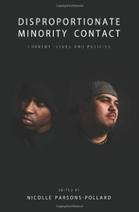
Disproportionate Minority Contact: Current Issues and Policies, discusses policies and practices that unintentionally draw a greater number of youth of color into the juvenile justice system and features a chapter written by The Sentencing Project's Research Analyst Ashley Nellis.  
Picture
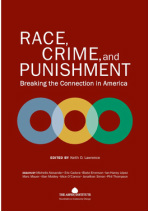
"Race, Crime and Punishment: Breaking the Connection in America" A Collection of Essays explores how race, crime and punishment are linked in the public mind, and strategies to reduce  
Picture

Do Judges Vary in Their Treatment of Race? Nellco Legal Scholarship Repository Publication by David S. Abrams, Marianne Bertrand, and Sendhil Mullainathan.


Picture
PROBATION INTAKE OFFICERS HARSHER ON BLACK YOUTH
In their study “Does the Gender of the Intake Probation Officer Contextualize the Treatment of Black Youth?” authors Michael Leiber and Sarah Jane Brubaker found that racial bias played a larger role than the gender or individual characteristics of the decision maker when diversion choices were made within the juvenile justice system.
Picture

Executive Director of the Sentencing Project Marc Mauer's article "Sentencing Reform: Amid Mass Incarceration, Guarded Optimism," appears in the current issue of the American Bar Association's Criminal Justice Magazine.

Picture
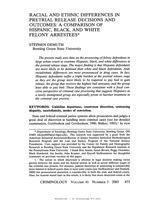
New studies analyze data on the processing of felony defendants in large urban centers, and find racial disparity: Racial and  Ethnic Differences in Pretrial Release Decisions and Outcomes: A Comparison of  Hispanic, Black, and White Felony Arrestees By Stepthen Demuth.

Contacts


Center for Court Innovation (CCI)
Courtney Bryan
Project Director
Midtown Community Court
314 W 54th Street
New York, NY 10019
(646) 264-1302 (p)
(212) 586-1144 (f)
[email protected]


The PEW Charitable Trusts
901 E Street, NW
Washington, DC 20004
202.552.2000 (p)
202.552.2299 (f)
[email protected]



Powered by Create your own unique website with customizable templates.